 | 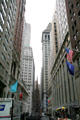 |  |  |
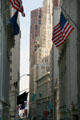
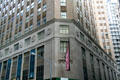
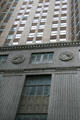
| Wall Street viewed east from Trinity Church including Stock Exchange at right. New York, NY. | Wall Street viewed west showing Trinity Church & Trump Building at right. New York, NY. | New York Stock Exchange (1903) (8-18 Broad St.). New York, NY. Style: Classical Revival. Architect: George B. Post. On National Register. | New York Stock Exchange frieze above American flag. New York, NY. |
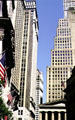 | 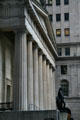 | 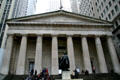 | 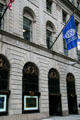 |
| Looking up Broad Street across New York Stock Exchange & Federal Hall. New York, NY. | Federal Hall where George Washington took oath as first President of United States (April 30, 1879). New York, NY.  | Federal Hall National Memorial (former U.S. Custom House & Treasury) (1833-42) (28 Wall St.). New York, NY. Style: Neoclassical. Architect: Town & Davis + Samuel Thompson + William Ross & John Frazee. On National Register. | United States Assay Office Building (1919) (30-32 Wall St.) (12 floors). New York, NY. Architect: York & Sawyer. |
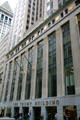 | 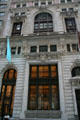 | 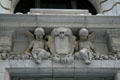 | 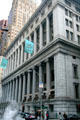 |
| The Trump Building (1930) (40 Wall St.) (70 floors). New York, NY. Architect: H. Craig Severance, Yasuo Matsui, Shreve & Lamb. | Tiffany (former U.S. Trust Company) Building (1907) (37 Wall St.) (25 floors). New York, NY. Architect: Francis H. Kimball. | Carved cherubs on Tiffany (former U.S. Trust Company) Building. New York, NY. | Cipriani Club Residences (former Regent Wall Street Hotel then Custom House) (1842) (55 Wall St.) (9 floors). New York, NY. Architect: Isaiah Rogers + William A. Potter + McKim Mead & White. |
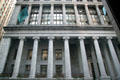 | 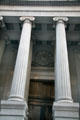 | 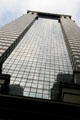 | 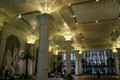 |
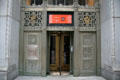
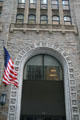
| Neoclassical columns of former Regent Wall Street Hotel. New York, NY. | Portal of former Regent Wall Street Hotel. New York, NY. | 60 Wall Street (1989) (55 floors). New York, NY. Architect: Kevin Roche John Dinkeloo & Assoc.. | Lobby of 60 Wall Street. New York, NY. |
 |  |  |  |
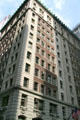
| The Crest (1929) (63 Wall St.) (34 floors). New York, NY. Architect: Delano & Aldrich. | Coins & neoclassical ornaments on ground floors of The Crest highrise on Wall Street. New York, NY. | First National City Trust now 20X building (former Canadian Imperial Bank of Commerce) (1931) (22 William St.). New York, NY. Style: Art Deco. Architect: Cross & Cross. | Williamsburgh Savings Bank (former Seaman's Bank for Savings) (1927) (74 Wall St.). New York, NY. Architect: Benjamin Wistar Morris. |
 | 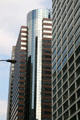 | 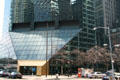 | 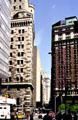 |
| Tontine House (13 floors) (80-82 Wall St.). New York, NY. Architect: Clinton & Russell. | National Westminster Bank (1983) (175 Water St.) (30 floors). New York, NY. Architect: Fox & Fowle Architects, P.C.. | Continental Center (1983) (180 Maiden Lane) (41 floors). New York, NY. Architect: Swanke Hayden Connell Architects. | Federal Reserve Bank of New York (1919-24) (33 Liberty St.) plus streetscape. New York, NY. Style: Florentine Palazzo. Architect: York & Sawyer. On National Register. |
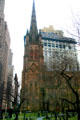 | 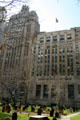 | 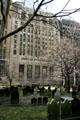 | 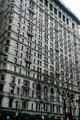 |
| Trinity Church (1846) (79 Broadway at Wall St.). New York, NY. Style: Gothic Revival. Architect: Richard Upjohn. | Trinity Court Building (1927) (25 floors) by Henry I. Oser & American Stock Exchange buildings over Trinity Church graveyard. New York, NY. | American Stock Exchange (1921) (86 Trinity Place) (16 floors). New York, NY. Style: Art Deco. Architect: Starrett & Van Vleck. | Empire Building (1898) (71 Broadway) (21 floors). New York, NY. Architect: Kimball & Thompson. |
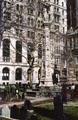 | 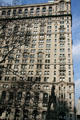 | 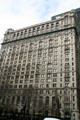 | 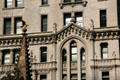 |
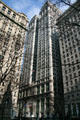
| Shrine in Trinity Church yard against Trinity office building north of church. New York, NY. | Trinity Building (1907) (111 Broadway). New York, NY. Style: Late Gothic Revival. Architect: Francis Hatch Kimball. On National Register. | Facade of Trinity Building which shares lot with United States Realty Company Building just next door up Broadway. New York, NY. | Gothic Revival details of Trinity Building. New York, NY. |
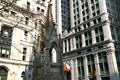 | 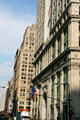 |  |  |
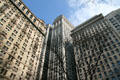
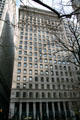
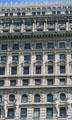
| Gothic churchyard spire with Trinity & Equitable Buildings. New York, NY. | Looking up Broadway across Equitable Building. New York, NY. | Equitable Building (1915) (120 Broadway) (40 floors) (world's largest when built). New York, NY. Architect: Ernest Graham & Assoc.. On National Register. | Portal details of Equitable Building. New York, NY. |
 |  |  | 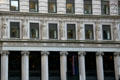 |
| Trinity, Equitable & Bank of Tokyo Buildings on Broadway. New York, NY. | Bank of Tokyo (former American Surety Co.) (1895) (100 Broadway) (26 floors). New York, NY. Architect: Bruce Price. | Bank of Tokyo (former American Surety Co.) upper floors with sculptures by J. Massey Rhind. New York, NY. | Bank of Tokyo (former American Surety Co.) figures of Peace, Truth, Honesty, Fortitude, Self-Denial, Fidelity sculpted (1895) by John Massey Rhind. New York, NY. |
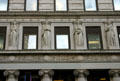 | 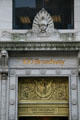 | 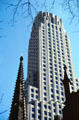 |  |
| Details of sculpted female figures by John Massey Rhind on Bank of Tokyo (former American Surety Co.) building. New York, NY. | Portal of Bank of Tokyo (former American Surety Co.) at 100 Broadway. New York, NY. | Trinity Spire & Bank of New York (1930) (1 Wall St.) (50 floors) with octagonal top. New York, NY. | Bank of New York Building (1929) (48 Wall St.) (32 floors). New York, NY. Style: Colonial Revival. Architect: Benjamin Wistar Morris. On National Register. |
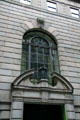 | 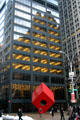 | 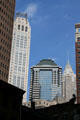 | 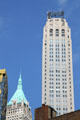 |
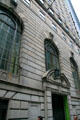
| Bank of New York Building facade details, now home of Museum of American Finance. New York, NY. | HSBC Bank (1967) (140 Broadway) (52 Floors) with holed-cube sculpture by Isamu Noguchi. New York, NY. Architect: Gordon Bunshaft of Skidmore, Owings, Merril (SOM). | 20 Exchange Place, 60 Wall St., & American International (1932) (70 Pine St.) (66 floors) by Holton & George + Clinton & Russell. New York, NY. | 20 Exchange Place (1931) (57 floors) over green pyramid of Trump Tower on Wall St. New York, NY. Architect: Cross & Cross. |
 | ![Hanover Bank [aka New York Cotton Exchange] [aka India House]. New York, NY.](/t/USNYC/NYDB261.JPG) | 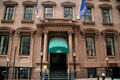 | 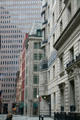 |
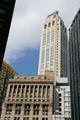
| New York Cotton Exchange (1923) (3 Hanover Square) (23 floors) in front of 20 Exchange Place. New York, NY. Architect: Donn Barber. | Hanover Bank [aka New York Cotton Exchange] [aka India House] (1853) (1 Hanover Sq.). New York, NY. Style: Italianate. Architect: Richard J. Carman. On National Register. | India House facade. New York, NY. | Stone St. Historic District looking west. New York, NY. |
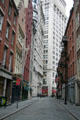 | 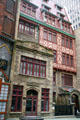 | 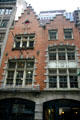 | 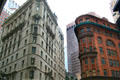 |
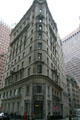
| Stone St. Historic District looking east. New York, NY. | Stone St. Historic District buildings replicated in Dutch style (21-23 S. William St.). New York, NY. | Recreation of New Amsterdam Buildings (1903-8) (13-15 S. William St.). New York, NY. Architect: C.P.H. Gilbert. | J. & W. Seligman & Co. & Delmonico Restaurant Buildings. New York, NY. |
 |  |  |
|
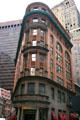
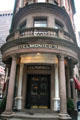
| J. & W. Seligman & Co. Building (1907) (1 William St.). New York, NY. Style: Beaux Arts. Architect: Francis H. Kimball. | Delmonico Restaurant Building (1891) (56 Beaver St.). New York, NY. Architect: James Lord Brown. | Entrance of Delmonico Restaurant Building. New York, NY. |
|