 | 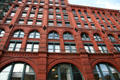 | 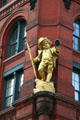 | 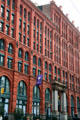 |
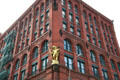
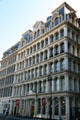
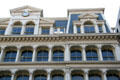
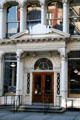
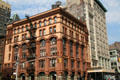
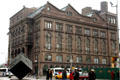
| Puck Building (1886 & 93) (295-309 Lafayette St.). New York, NY. Style: Romanesque Revival. Architect: Albert Wagner & Herman Wagner. On National Register. | Facade of Puck Building of NYU. New York, NY. | Puck statue (1885) by Henry Baerer on Puck Building (295 Lafayette St. at Houston). New York, NY. | Entrance facade of Puck Building of NYU. New York, NY. |
 |  |  |  |
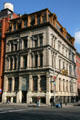
| Robbins & Appleton Building (1880) (1-5 Bond St.). New York, NY. Style: Second Empire. Architect: Stephen Decatur Hatch. On National Register. | Mansard roofline of Robbins & Appleton Building. New York, NY. | Second Empire entrance to Robbins & Appleton Building. New York, NY. | Schermerhorn Building (1889) (376-380 Lafayette St.) (6 floors). New York, NY. Style: Romanesque Revival. Architect: Henry Janeway Hardenbergh. On National Register. |
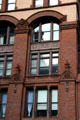 | 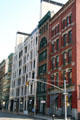 | 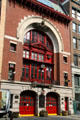 | 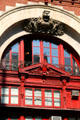 |
| Facade details of Schermerhorn Building on Lafayette St. New York, NY. | Streetscape along Bond St. from Lafayette with modern infill (25 Bond) among heritage buildings. New York, NY. | Fire Engine Company #33 (1898) (44 Great Jones St.). New York, NY. Style: Beaux Arts. Architect: Ernest Flagg & Walter B. Chambers. On National Register. | Arched front window of Fire Engine Company #33. New York, NY. |
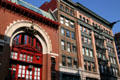 | 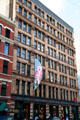 | 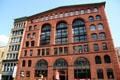 | 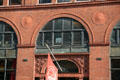 |
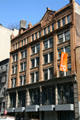
| Fire Engine Company #33 & neighboring Great Jones St. heritage buildings. New York, NY. | Heritage commercial building (402 Lafayette St.). New York, NY. | De Vinne Press Building (1885 & 1892) (393-399 Lafayette St.). New York, NY. Style: Romanesque. Architect: Babb, Cook & Willard. On National Register. | Terra cotta details of De Vinne Press Building (393-399 Lafayette St.). New York, NY. |
 |  |  | ![LaGrange Terrace [aka Colonnade Row]. New York, NY.](/t/USNYC/NYDD0681.JPG) |
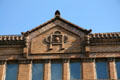
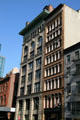
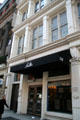
| Heritage commercial building (411 Lafayette St.) now used by NYU. New York, NY. | Terra cotta & brick details of 411 Lafayette St. New York, NY. | Heritage commercial buildings (419 & 417 Lafayette St.). New York, NY. | LaGrange Terrace [aka Colonnade Row] (1833) (428-434 Lafayette St.). New York, NY. Style: Greek Revival. Architect: Alexander Jackson Davis (attrib.). On National Register. |
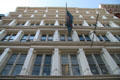 |  | 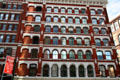 | 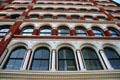 |
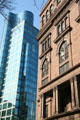
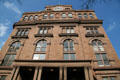
| 436 Lafayette St. (1871). New York, NY. Architect: Edward Hale Kendall. | Shop entrance (436 Lafayette St.) off Astor Square. New York, NY. | 4 Astor Place (7 floors) opposite Cooper Union. New York, NY. | Facade of 4 Astor Place. New York, NY. |
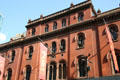 | 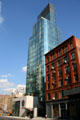 | 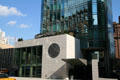 |  |
| New York Shakespeare Festival Public Theater or Joseph Papp Public Theater (former Astor Library) (1881) (425 Lafayette St.). New York, NY. Architect: Wings: south Alexander Saeltzer (1853); center Griffith Thomas (1869); north Thomas Stent (1881). | Astor Place (2005) (445 Lafayette St.) (21 floors) over 435 Lafayette. New York, NY. Architect: Ismael Leyva Architects + Gwathmey, Siegel & Assoc.. | Ground floor entrance of Astor Place. New York, NY. | Astor Place & Cooper Union Buildings. New York, NY. |
 |  |  | 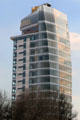 |
Cooper Union (1859) (Cooper Square). New York, NY. Style: Italianate. Architect: Frederick A. Peterson. On National Register.  | Cooper Union Building (1859) on Astor Place is oldest iron frame building in USA. New York, NY. | Metropolitan Savings Bank (now Assembly of God) (1867) (6 E. 7th St. at Cooper Sq.). New York, NY. Style: Second Empire. Architect: Carl Pfeiffer. On National Register. | Cooper Square Hotel (2008) (25-33 Cooper Square) (23 floors). New York, NY. Architect: Perkins Eastman Architects P.C. + Carlos Zapata Studio. |
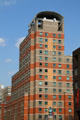 | 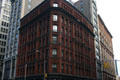 | 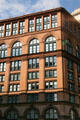 | 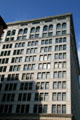 |
| NYU Alumni Hall (33 3rd Ave. at 9th St.) (16 floors). New York, NY. | Astor Place Building (1881) (750 Broadway at Astor Place). New York, NY. Architect: Starkweather & Gibbs. | 21 Astor Place (1891) (11 floors). New York, NY. | Wanamaker Store Annex (1907) (14 floors) (Broadway at 4th St.). New York, NY. Architect: D.H. Burnham & Co.. |
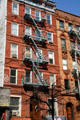 |  | 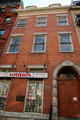 | 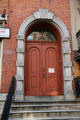 |
| Heritage town houses on St. Mark's Place. New York, NY. | Details of former wealthy townhouse near Cooper Square (1888) (12 St. Mark's Place). New York, NY. | Daniel LeRoy House (1832) (20 St. Mark's Place). New York, NY. Style: Federal Baroque. Architect: Thomas E. Davis. On National Register. | Federal Baroque doorway of Daniel LeRoy House. New York, NY. |
 |
|
|
|
| Art Deco Verizon building front on Second Ave. below Stuyvesant Square. New York, NY. |
|
|
|