 | 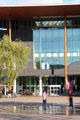 | 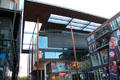 | 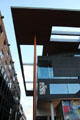 |
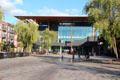
| Fries Museum, located in a modern building (2013) on a large plaza in the center of Leeuwarden, is dedicated to preserving & displaying the heritage of the Dutch province of Friesland. Leeuwarden, Netherlands. Architect: Hubert-Jan Henket. | Entrance to Fries Museum. Leeuwarden, Netherlands. | Transparent public ground floor at Fries Museum. Leeuwarden, Netherlands. | Looking up from public ground floor at Fries Museum. Leeuwarden, Netherlands. |
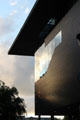 | 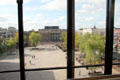 | 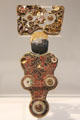 | 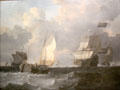 |
| Overhanging roof, architectural feature at Fries Museum. Leeuwarden, Netherlands. | View through windows overlooking Wilhelminaplein at Fries Museum. Leeuwarden, Netherlands. | Wijnaldum Fibula (575-600 CE) gold plated cloak pin set with over 300 almandines (garnets) from India likely worn by a wealthy woman, found near village of Wijnaldrum in Freisland at Fries Museum. Leeuwarden, Netherlands. | Sea View painting (1685) by Wigerus Vitringa, renowned Frisian painter at Fries Museum. Leeuwarden, Netherlands. |
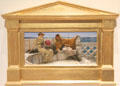 | 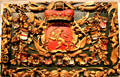 | 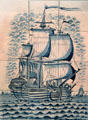 | 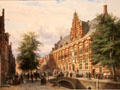 |
| Amo Te Ama Me painting (1881) by Lawrence Alma-Tadema celebrated in Freisland for his paintings of scenes from the classical world at Fries Museum. Leeuwarden, Netherlands. | Coat of arms of the Frisian admiralty artwork (latter half of 17thC) by Hermannus van Arnhem at Fries Museum. Leeuwarden, Netherlands. | Frisian tile tableau representing ships carrying Frisian ceramics all over the world (1760) by Hilbrand James at Fries Museum. Leeuwarden, Netherlands. | View of Turfmarkt & Chancellery of Leeuwarden painting (1873) confirming its status as Friesland's capital by Cornelis Springer at Fries Museum. Leeuwarden, Netherlands. |
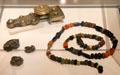 | 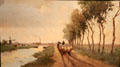 | 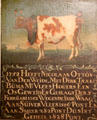 | 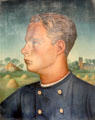 |
| Buriel gifts (c600-650CE) found in Friesland's tallest dwelling mound, Hegebeintum terp at Fries Museum. Leeuwarden, Netherlands. | Friesland milk wagon driving on country road painting (c1925-37) with dairy factory with typical high chimney in the far distance by Egnatius Ydema at Fries Museum. Leeuwarden, Netherlands. | Frisian cow painting, also referred to as a Memory Board (1753) at Fries Museum. Leeuwarden, Netherlands. | Blonde Aryan farmer painting (pre-1940) placed by a headmaster, against the subject's wishes, in his agricultural school as an ideal example of a perfect Germanic young man by Bouke van der Sloot at Fries Museum. Leeuwarden, Netherlands. |
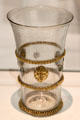 | 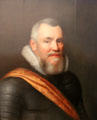 | 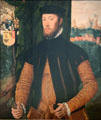 | 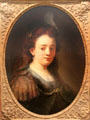 |
| Glass goblet (1599) likely given as an engagement present with names self-engraved on the glass made by Gelaesenhuys glassworks, Antwerp at Fries Museum. Leeuwarden, Netherlands. | Frisian Stadholder Willem Lodewijk portrait (1616) who is a distant relative of the current King by Michiel Jansz, of van Mierevelt's studio at Fries Museum. Leeuwarden, Netherlands. | Rienck van Cammingha portrait (1552), a powerful man in Leeuwarden, with his family arms & residence in the background by Adriaen van Cronenburg, considered best painter of his time, at Fries Museum. Leeuwarden, Netherlands. | Saskia Uylenburgh Rembrandt portrait (1635), daughter of mayor of Leeuwarden & wife of Rembrandt van Rijn by Govert Flinck at Fries Museum. Leeuwarden, Netherlands. |
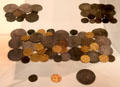 | 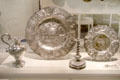 | 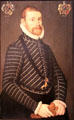 | 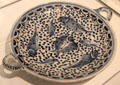 |
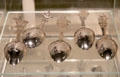
| Pile of coins (1500-1699), called ducats at the time, from Friesland, Grningen & Utrecht but could be used throughout the Republic at Fries Museum. Leeuwarden, Netherlands. | Popta treasure silverware (c1670), a famous collection crafted by master silversmiths from Friesland, originally owned by Dr. Henricus Popta and eventually donated (1877) to the newly opened Fries Museum. Leeuwarden, Netherlands. | Portrait of country gentlemen (grietman), who presided over a country community in Friesland (1576) by Syds van Botnia at Fries Museum. Leeuwarden, Netherlands. | Luxury colander (latter half 18thC) decorated with fish from one of Friesland's many potteries which flourished due to the almost unlimited supply of clay combined with proximity of shipping ports at Fries Museum. Leeuwarden, Netherlands. |
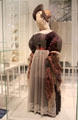 |  | 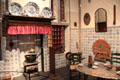 | 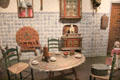 |
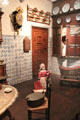
| Frisian wear (1830-40) which varied from one region to another & which would have been worn as daily dress until around 1900 at Fries Museum. Leeuwarden, Netherlands. | Silver birth spoons (1802-1869) engraved with the newborn's name & date of birth & given as a valuable gift at Fries Museum. Leeuwarden, Netherlands. | Room created by contemporary designers in the hindeloopen style characterised by bright colors, ornate decorations & luxury items from all over the world; the name was taken from the town which prospered through Baltic trading in the 17tth & 18th centuries by Chris Kabel & Gijs Frieling at Fries Museum. Leeuwarden, Netherlands. | Details of Hindeloopen room with ornately painted furniture (including fold-away table) & wall covered with Delft tiles at Fries Museum. Leeuwarden, Netherlands. |
 | 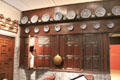 | 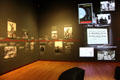 | 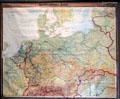 |
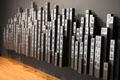
| Details of Hindeloopen room with ornately painted furniture & wall covered with Delft tiles at Fries Museum. Leeuwarden, Netherlands. | Details of Hindeloopen room with bedsteades characteristic of the Low Countries before the modern era & used to help stay warm through body heat at Fries Museum. Leeuwarden, Netherlands. | Display about the hardship & terror in the Netherlands during the Nazi occupation during WWII at Fries Museum. Leeuwarden, Netherlands. | The limits of the land that was governed as Germany during WWII plus surrounding occupied countries at Fries Museum. Leeuwarden, Netherlands. |
 | 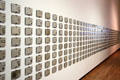 | 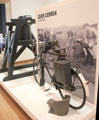 | 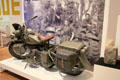 |
| Photos of murdered Dutch WWII resistance fighters at Fries Museum. Leeuwarden, Netherlands. | Identity cards which, under German occupation, all Dutch were required to carry at all times during WWII ; cards of citizens considered to be Jewish were stamped with a prominent J at Fries Museum. Leeuwarden, Netherlands. | Geen Gebrek, meaning "no scarcity" , was an ironic nickname applied by Dutch city dwellers to the bicycles they used to seek out food from the countryside during the famine towards the end of WWII at Fries Museum. Leeuwarden, Netherlands. | Harley Davidson "Liberator" so called because they were used by Allied forces after the liberation of the Netherlands towards the end of WWII at Fries Museum. Leeuwarden, Netherlands. |
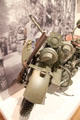 | 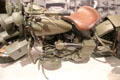 | 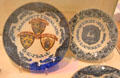 | 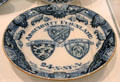 |
| Close up of Harley Davison "Liberator" used by Allied forces (primarily Canada) after the liberation of the Netherlands towards the end of WWII at Fries Museum. Leeuwarden, Netherlands. | Details of Harley Davidson "Liberator" used by Allied Forces after the liberation of the Netherlands towards the end of WWII at Fries Museum. Leeuwarden, Netherlands. | Memorial plates ordered by the German War Navy stationed in the coastal region of the Netherlands during WWII, manufactured by Tichelaar in Makkum Friesland at Fries Museum. Leeuwarden, Netherlands. | Memorial plate ordered by German War Navy while occupying the coastal regions of the Netherlands at Fries Museum. Leeuwarden, Netherlands. |
 |
|
|
|
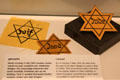
| Examples of Star of David which the Nazis required Jewish people to wear prominently on their clothing during the German occupation of the Netherlands in WWII at Fries Museum. Leeuwarden, Netherlands. |
|
|
|