 | 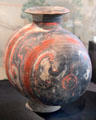 | 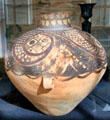 | 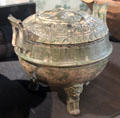 |
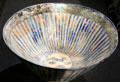
| Stoneware example (1660-80 Persia) of tin-glaze technique which made it possible to completely cover colored earthenware with a white layer after which it could be decorated at Het Princesse Hof Museum. Leeuwarden, Netherlands. | Ancient (4500-2000 BCE) Chinese ceramic object with notable refinement in shape & decoration at Het Princesse Hof Museum. Leeuwarden, Netherlands. | Earthenware Chinese jar (c2600-2300BCE) with a decoration of scrolling geometric motifs at Het Princesse Hof Museum. Leeuwarden, Netherlands. | Chinese incense burner (25BCE - 220CE) which employed the technique of glazing at Het Princesse Hof Museum. Leeuwarden, Netherlands. |
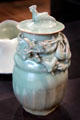 | 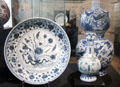 | 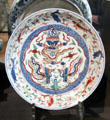 | 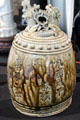 |
| Celedon Chinese funerary jar with cover (Tang, Song or Yuan Dynasties) at Het Princesse Hof Museum. Leeuwarden, Netherlands. | Imperial Blue Chinese Ming porcelain (1368-1644} at Het Princesse Hof Museum. Leeuwarden, Netherlands. | Chinese Ming porcelain (1573-1619} with multiple colors, a major steop forward known as "wucai" or five colors, at Het Princesse Hof Museum. Leeuwarden, Netherlands. | Chinese Ming stoneware & celedon temple bell (1573) donated by newly married couple with the dragons on the cover symbolising the couple at Het Princesse Hof Museum. Leeuwarden, Netherlands. |
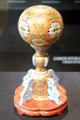 | 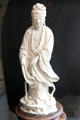 | 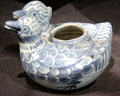 | 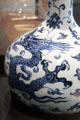 |
| Chinese highly decorated porcelain hat stand (18thC) belonging to Emperor Qianlong at Het Princesse Hof Museum. Leeuwarden, Netherlands. | Qing Chinese porcelain figure (18thC) in the form of Guanyin, the Buddhist goddess of compassion, mercy & love at Het Princesse Hof Museum. Leeuwarden, Netherlands. | Ming Chinese porcelain pair of Mandarin ducks (1450-1500) popular as wedding gifts at Het Princesse Hof Museum. Leeuwarden, Netherlands. | Ming Chinese early blue & white porcelain vase (1403-24) with three-toed dragon at Het Princesse Hof Museum. Leeuwarden, Netherlands. |
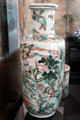 | 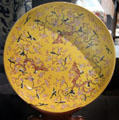 | 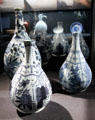 | 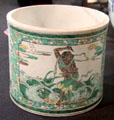 |
| Chinese Qung Dynasty large multi-color porcelain vase at Het Princesse Hof Museum. Leeuwarden, Netherlands. | Chinese Qing porcelain yellow plate (1862-1874) with magpies & prunus (tree or fruit that produced a fruit with a stone) representing luck or happiness at Het Princesse Hof Museum. Leeuwarden, Netherlands. | Display of Chinese ceramic bottles of differing materials (17th C) at Het Princesse Hof Museum. Leeuwarden, Netherlands. | Chinese Qing multi-color porcelain brush pot (c1700-1720) with decoration of scholar & the dwarf Kui Xing at Het Princesse Hof Museum. Leeuwarden, Netherlands. |
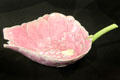 | 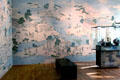 | 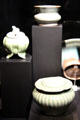 | 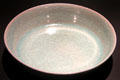 |
| Chinese Qing porcelain water dropper (1908) in shape of pink rose, a color developed during Qing dynasty, at Het Princesse Hof Museum. Leeuwarden, Netherlands. | Chinese style wall covering at Het Princesse Hof Museum. Leeuwarden, Netherlands. | Display of Chinese celedon ceramics noted for their unique greenish glaze ressenbling jade at Het Princesse Hof Museum. Leeuwarden, Netherlands. | Chinese Ru celadon (c1086-1106) brush washer which is characterized by tiny fissures in the crackled glaze, is extremely rare at Het Princesse Hof Museum. Leeuwarden, Netherlands. |
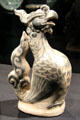 | 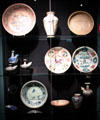 | 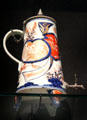 | 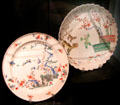 |
| Vietnamese stoneware jug shaped as phoenix (16thC) at Het Princesse Hof Museum. Leeuwarden, Netherlands. | Collection of porcelain imported from the Orient at Het Princesse Hof Museum. Leeuwarden, Netherlands. | Japanese Arito Edo coffee pot (1700-30) Imari style decorated with flowers & plants for western market at Het Princesse Hof Museum. Leeuwarden, Netherlands. | Plates imitating popular Japanese Imari style decoration made in Delft (1701-22) by De Grieksche A & De Porceleyne Fles factories respectively at Het Princesse Hof Museum. Leeuwarden, Netherlands. |
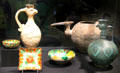 | 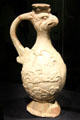 | 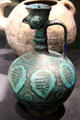 | 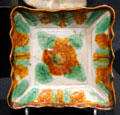 |
| Display of Silk Road trade ceramics (600-1200) goods at Het Princesse Hof Museum. Leeuwarden, Netherlands. | Chinese Tang earthenware jug (618-907) with phoenix head & phoenixes in relief, a Silk Road trading good, at Het Princesse Hof Museum. Leeuwarden, Netherlands. | Iran, Gurgan quartz fritware jug with bird's head (13thC), a Silk Road trading good, at Het Princesse Hof Museum. Leeuwarden, Netherlands. | Chinese Liao earthenware dish with scalloped rim (916-1125), a Silk Road trading good at Het Princesse Hof Museum. Leeuwarden, Netherlands. |
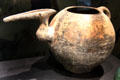 | 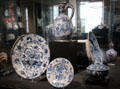 | 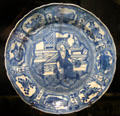 | 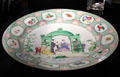 |
| Pre-Islamic Iranian beaked earthenware ewer (1000 BCE) at Het Princesse Hof Museum. Leeuwarden, Netherlands. | Kraak blue & white Chinese porcelain arrived in Holland via a Dutch captured Portuguese ship (1602) & became very popular among the Dutch population; Dutch potters immitated these Chinese ceramics using white tin glaze on earthenware & applying Oriental looking decorations in blue at Het Princesse Hof Museum. Leeuwarden, Netherlands. | Chinese porcelain plate decorated with a seated man (1595-1610) at Het Princesse Hof Museum. Leeuwarden, Netherlands. | Chinese porcelain plate with "The Arbour" decoration (c1738) after a design by Cornelis Pronk at Het Princesse Hof Museum. Leeuwarden, Netherlands. |
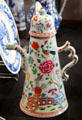 | 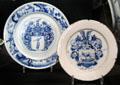 | 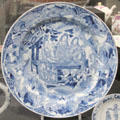 | 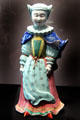 |
| Chinese porcelain coffee pot (1740-50) with Chinese style decorations to appeal to the Western market at Het Princesse Hof Museum. Leeuwarden, Netherlands. | Delft earthenware plate decorated with coat of arms (1656) & Chinese porcelain plate with coat of arms of Joannes Camphuijs (1690-95) at Het Princesse Hof Museum. Leeuwarden, Netherlands. | Chinese porcelain dish with center decoration of muscians and medallions with various scenes on the edge (c1700) at Het Princesse Hof Museum. Leeuwarden, Netherlands. | Rare Chinese porcelain figure, probably made to order, known as Mrs Duff (Qing, 1736-45) based on European figure of a Jewish woman at Het Princesse Hof Museum. Leeuwarden, Netherlands. |
 |  |  |
|
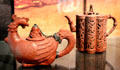
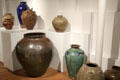
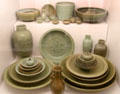
| Chinese Yixing stoneware teapot shaped as phoenix (1675-1725) & Chinese stoneware teapot with bamboo openworked decoration (1700-1725) at Het Princesse Hof Museum. Leeuwarden, Netherlands. | Array of Martabans (storage jars) (c600-1900) made in Asia, highly valued & often saved over generations at Het Princesse Hof Museum. Leeuwarden, Netherlands. | Array of celadon pottery which is glazed in a jade green color & also refers to a transparent glaze frequently with small cracks at Het Princesse Hof Museum. Leeuwarden, Netherlands. |
|