 | 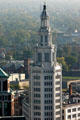 | 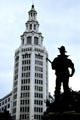 | 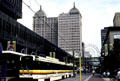 |
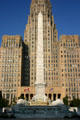
William McKinley Memorial (1907) in front of Buffalo City Hall. Buffalo, NY. Architect: John Merven Carrère & Thomas Hasting.  | Niagara Mohawk (former General Electric) Building (1912) (13 floors) (535 Washington St.) represents the Pharos lighthouse of Alexandria, Egypt & was inspired by buildings at the 1901 Pan Am Exhibition. Buffalo, NY. Architect: Esenwein & Johnson. | Niagara Mohawk Building & Spanish American War Monument. Buffalo, NY. | Main Street Transit Mall with streetcar against Liberty Building with twin Statues of Liberty. Buffalo, NY. |
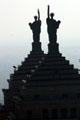 | 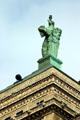 | 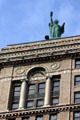 | 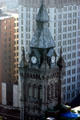 |
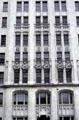
| Liberty Building twin miniatures of Statue of Liberty by Leo Lentelli atop step pyramids (1925) (23 floors) (Franklin at Court St.). Buffalo, NY. Architect: Alfred C. Bossom. | Statue of Liberty atop Liberty Building. Buffalo, NY. | Facade details of Liberty Building. Buffalo, NY. | Erie County Hall (1876) (Franklin St.) 76m 249ft where President William McKinley lay in state. Buffalo, NY. Style: Victorian Romanesque. Architect: Andrew Jackson Warner. On National Register. |
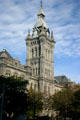 | 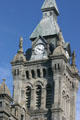 | 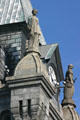 |  |
| Erie County Hall tower. Buffalo, NY. | Erie County Hall tower spire. Buffalo, NY. | Erie County Hall tower clock detail. Buffalo, NY. | Gothic-style skyscraper (1913) (now Verizon) (65 Franklin at Church). Buffalo, NY. |
 |  |  |  |
| Guaranty / Prudential Building (1895) (28 Church St.) (13 floors). Buffalo, NY. Style: Sullivanesque. Architect: Dankmar Adler & Louis Sullivan. On National Register. | Dun Building (1893) (100 Pearl St.) was cities first highrise. Dun later joined with Bradstreet. Buffalo, NY. Style: Renaissance Revival. Architect: E.B. Green & W.S. Wicks. | Ellicott Square Building (1895) (295 Main St.). Buffalo, NY. Style: French Renaissance. Architect: Charles B. Atwood of D.H. Burnham & Company. | Ellicott Square was largest office building in the world when built. Buffalo, NY. |
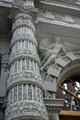 | 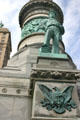 | 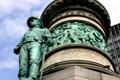 | 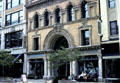 |
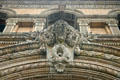
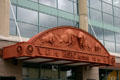
| Angel & fluted columns flank portal of Ellicott Square. Buffalo, NY. | Civil War or Soldiers & Sailors Monument (1884) in Lafayette Square. Buffalo, NY. Architect: George Keller. | Sculpted soldier & frieze by Caspar Buberl on Civil War Monument. Buffalo, NY. | Market Arcade (1892) (617-619 Main St.) has sculpted buffalo head over both entrances. Buffalo, NY. Style: Italian Renaissance. Architect: E.B. Green & W.S. Wicks. |
 | 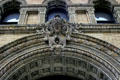 | 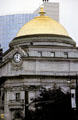 | 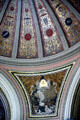 |
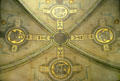
| Sculpted buffalo head over entrance to Market Arcade. Buffalo, NY. | Sculpted buffalo head over entrance to Market Arcade. Buffalo, NY. | Buffalo Savings Bank / M&T Bank (1901) (545 Main St.). Buffalo, NY. Style: Beaux Arts. Architect: E.B. Green & W.S. Wicks. | Painted dome interior of Buffalo Savings Bank. Buffalo, NY. |
 | 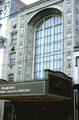 | 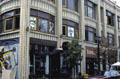 | 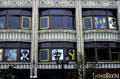 |
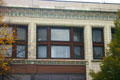
| Gold painted details in Buffalo Savings Bank. Buffalo, NY. | Shea's Buffalo Center for the Performing Arts (646 Main St.). Buffalo, NY. Architect: Cornelius Rapp & George Rapp. | Calumet Building (1906) (46-48 Chippewa St.). Buffalo, NY. Architect: Esenwein & Johnson. | Calumet Building bay windows. Buffalo, NY. |
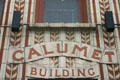 | 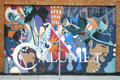 |  | 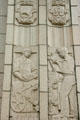 |
| Calumet Building tile sign. Buffalo, NY. | Calumet Building jazz mural. Buffalo, NY. | Ansonia Building (1921) (712-726 Main St.) with tree design in green tiles. Buffalo, NY. Style: Art Nouveau. Architect: Esenwein & Johnson. | Reliefs of sterotyper & pressman on former newspaper Courier Express Building. Buffalo, NY. |
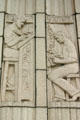 |  |  |  |
| Reliefs of editor & linotyper on former newspaper Courier Express Building. Buffalo, NY. | Freedom of Speech tile on Courier Express Building (1930) (795 Main St.). Buffalo, NY. Style: Art Deco. Architect: Monks & Johnson + D.A. Gantaume. | Buffalo reliefs on entrance of HSBC Arena. Buffalo, NY. | The Mansion at 414 Delaware Ave. (1869) now a hotel but built as a residence for Charles F. Sternberg. Buffalo, NY. Style: Second Empire. Architect: George Allison. |
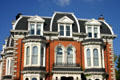 | 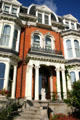 | 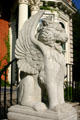 | 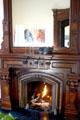 |
| Mansard roof & Second Empire-style details of The Mansion on Delaware. Buffalo, NY. | Entrance of The Mansion on Delaware. Buffalo, NY. | Winged lion outside The Mansion on Delaware. Buffalo, NY. | Foyer fireplace in The Mansion on Delaware. Buffalo, NY. |
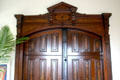 | 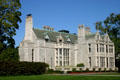 | 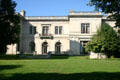 | 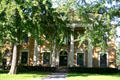 |
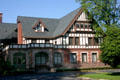
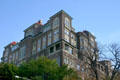
| Interior sliding pocket doors of The Mansion on Delaware. Buffalo, NY. | Stephen M. Clement House (1914) (786 Delaware Ave.) now Red Cross Building on millionaires row. Buffalo, NY. Style: Tudor Revival. Architect: E.B. Green & W.S. Wicks. | Knox House (800 Delaware Ave.) on millionaires row. Buffalo, NY. | Forman-Cabana House (824 Delaware Ave.) on millionaires row. Buffalo, NY. Style: Beaux Arts. Architect: E.B. Green & W.S. Wicks. |
 |  |  |
|
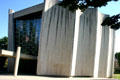
| Richmond-Lockwood House (1888) (844 Delaware Ave.) on millionaires row. Buffalo, NY. Architect: Marling & Burdett. | Campanile Apartments (1929) (925 Delaware & Bryant). Buffalo, NY. Style: Italian Renaissance Revival. Architect: B. Frank Kelly. | Temple Beth Zion (1967) (599 Delaware Ave.) where encircling walls represent ten commandments. Buffalo, NY. Architect: Max Abramowitz. |
|